

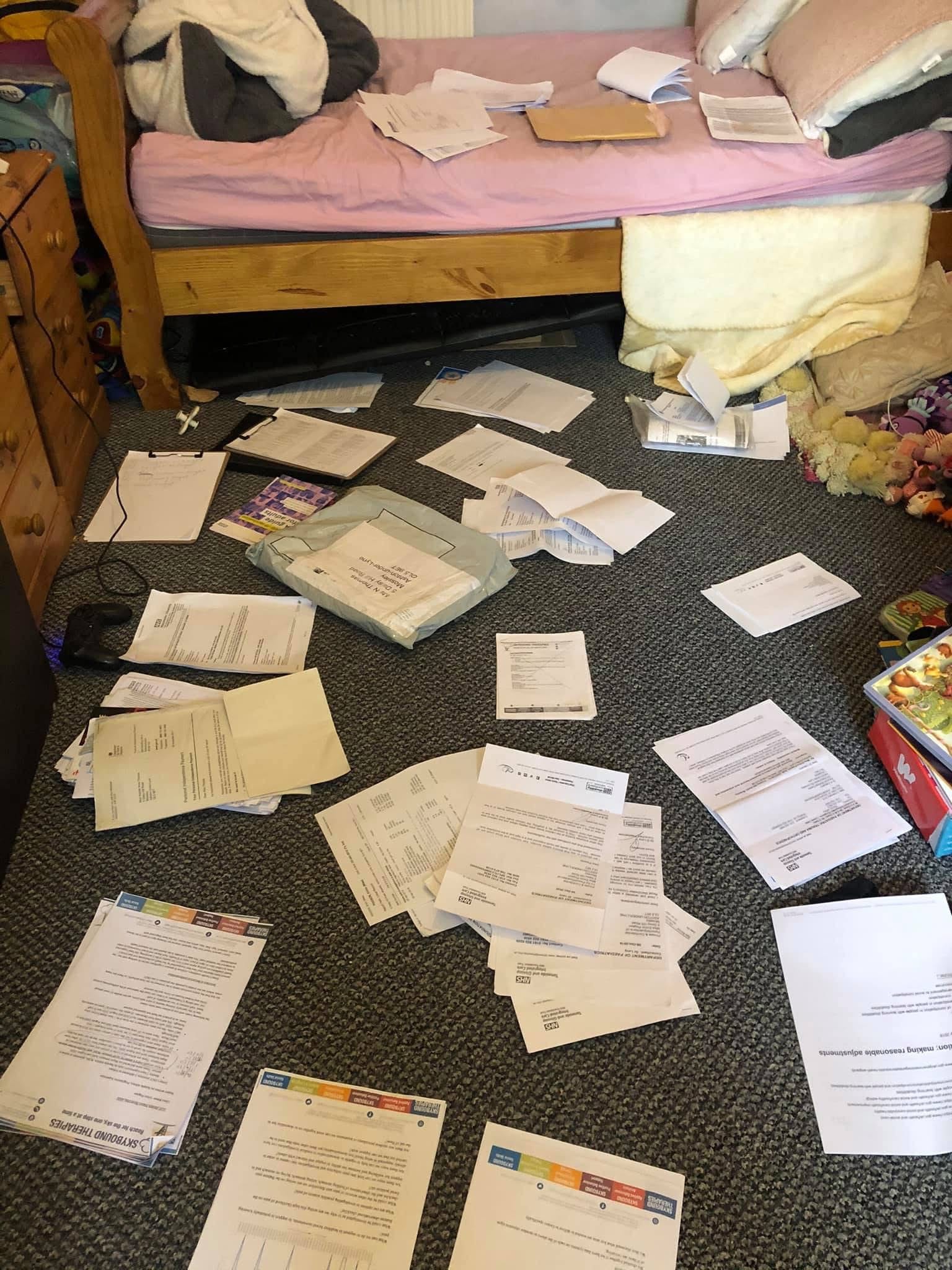
There is a particular kind of tiredness that does not come from not sleeping.
It comes from years of translating. From taking what you know to be true about your child, what you have watched, measured, documented, lived and finding ways to put it into language that other people will accept. Language that fits forms. Language that satisfies processes. Language that does not sound like a parent who is too close, too emotional, too much.
You learn to write in a register that is not yours. You learn to cite. You learn to frame need as deficit and deficit as provision and provision as something a local authority might one day be persuaded to fund. You do this because there is no one else to do it. You do this at laptops and computer screens after the day has ended, when the house is quiet and the weight of it is the only thing still moving.
People come. Professionals, specialists, consultants. They arrive with clipboards and good intentions and the particular confidence of people who have not been doing this for very long. They observe. They write things down. They produce documents that describe your child in language you do not recognise, built on frameworks that do not fit what you actually see every day. And then, for reasons that are never quite fully explained, they leave.
They leave and the documents remain. Sometimes the documents are wrong. Sometimes they are incomplete. Sometimes they describe support that was never actually delivered, or provision that exists on paper but not in any room your child has ever been in. And you are left holding them, trying to work out what to do next, trying to work out whether to challenge or absorb or simply move on to the next thing because there is always a next thing.
What is hardest to explain to people who have not lived this is not the fighting. The fighting you understand. You know what you are fighting for and why. What is hardest to explain is the continuity of it. The fact that it does not stop. That there is no point at which you set it down and walk away and return to something you might call ordinary life, because this is ordinary life now. This is the texture of every week.
Letters go in. Responses do not come back. Deadlines pass. Reviews that were supposed to happen do not happen. And the child at the centre of all of it, your child, the one all of this paperwork is nominally about, continues to need what they need, regardless of whether any system has yet found a way to provide it.
You document. You date stamp. You keep copies of everything. Not because you are litigious or difficult or hostile, as you have sometimes been described, but because you learned early that the record is the only thing that does not disappear. People disappear. Provisions disappear. Funding disappears. The record, if you maintain it carefully and accurately, stays.
There are days when that feels like enough. There are days when it does not.
What you carry is not grief exactly, though grief is part of it. It is something closer to the particular weight of knowing, knowing what your child needs, knowing that you are right about it, knowing that the systems designed to help have not helped, and knowing that you will get up tomorrow and try again anyway. Not because you believe it will be easier. Because there is no version of this where you stop.
You were not trained for this. Nobody trains you for this. You learn it the way you learn everything that matters, by doing it, in the middle of it, without the option of stopping until you know enough to continue.
Some people will read this and feel it. Most will not, and that is not a criticism of them. It is simply the nature of experience that has no outside.
What stays is this: the child, the work, and the knowledge that carrying it is the only form of love available to you right now.
You carry it.